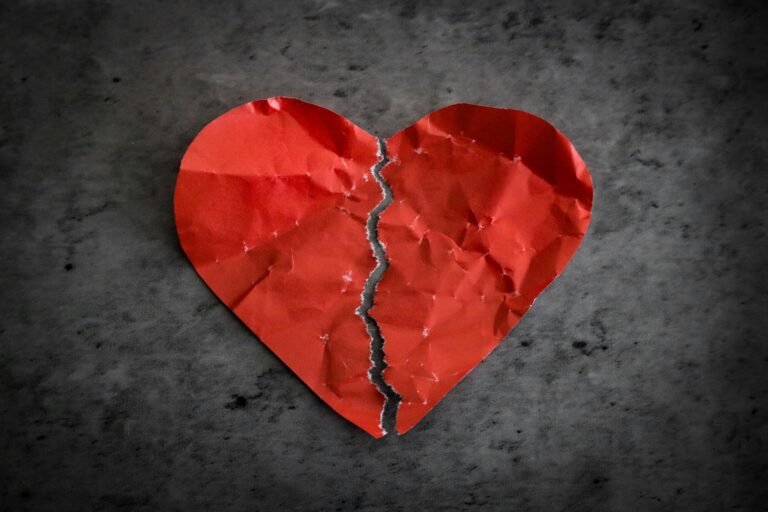
Why Do Breakups Hurt So Much? The Science of Heartbreak
You are lying on the floor wondering if you're being dramatic, because surely a breakup shouldn't feel like this. It feels like grief. It feels like the flu. It feels like someone reached into your chest and rearranged the furniture. And some helpful person in your life has probably said "it was just a relationship" in a tone that made you want to throw a shoe.
Heads up: this post contains affiliate links. If you buy through them, MyExSucks may earn a small commission at no extra cost to you — it helps keep the blog free. We only ever recommend things we’d hand to a friend going through it.
Here's the thing you need to hear first: you are not being dramatic, and you are not broken. Why do breakups hurt so much is not a silly question — it's one with real, well-documented answers. Your brain and body are doing exactly what they were built to do. The pain is loud because the system underneath it is powerful.
So let's actually look at it. Not in a cold, clinical way — in a "let me explain what's happening to you so it stops feeling like you're losing your mind" way. Because once you understand the machinery, the whole thing gets a little less scary.
Why do breakups hurt so much? Your brain treats it like withdrawal
Falling for someone lights up the reward circuitry in your brain — the same regions involved in motivation, craving, and reward. Being with them, hearing from them, even thinking about them delivered little hits of feel-good chemistry. Your brain learned that this person equals reward, and it got very, very good at wanting them.
Then they left. And the reward stopped — but the wanting didn't.
That gap between still craving and no longer getting is, neurologically, a lot like withdrawal. It's why:
- You feel restless and obsessive, checking your phone like an addict checking pockets.
- You can romanticize a relationship you logically know was a mess.
- You get physical symptoms — no appetite, then too much, sleep that won't come, a jittery hum under your skin.
You're not weak-willed. You're going through a real chemical comedown. Understanding that is the first step to rewiring your brain after a breakup instead of fighting yourself for "still caring."
Rejection registers as physical pain — literally
Here's a wild and validating fact: research using brain imaging has found that social rejection activates some of the same regions involved in processing physical pain. Your brain doesn't draw a clean line between "my body is hurt" and "my heart is hurt." To the ancient parts of your nervous system, a lost bond is a genuine threat.
That's why heartbreak doesn't stay politely in the "emotions" file. It shows up as:
- A literal ache in your chest or stomach.
- Exhaustion that no amount of sleep fixes.
- Feeling cold, shaky, or just unwell for no obvious reason.
There's even a recognized condition sometimes called "broken heart syndrome," where extreme emotional stress temporarily affects the heart and mimics a heart attack. The point isn't to scare you — it's to confirm that your body is in this with you. So when you feel physically wrecked, you're not imagining it.
We are wired to need connection — and losing it sets off alarms
For most of human history, being cast out from your group was genuinely dangerous. So we evolved to bond hard and to register the loss of a bond as an emergency. Your attachment system — the part of you that seeks closeness and safety from key people — does not care that it's the 21st century and you have Wi-Fi and friends. When a primary attachment disappears, it sounds the alarm.
That alarm is the panic, the spiraling, the 2 a.m. urge to text "I just need to know you're okay." It's not a character flaw. It's a survival system doing its job a little too well for modern dating.
This is also part of why you still miss your ex even when you know — really, truly know — they were not the one. Missing them isn't proof you should go back. It's proof you bonded, and bonds take time to dissolve.
Why the "why" loop won't stop running
If you've been lying awake replaying everything, hunting for the exact moment it went wrong, you're experiencing one of heartbreak's cruelest features: your brain hates an unfinished story.
Unresolved loss keeps the mind churning because, on some level, it's trying to "solve" the problem and win the person back. Every replay is your brain running simulations: What if I'd said this? What if I change that? It feels productive. It is not. It's a loop, and loops are exhausting.
Naming it helps. When you catch yourself mid-spiral, you can say: This is my brain trying to solve something that's already over. That tiny bit of distance is the beginning of how to stop thinking about your ex without white-knuckling it.
Why it hurts more when the breakup wasn't your idea
If you got dumped, blindsided, or ghosted, the pain often hits harder — and there's a reason. When you don't get to choose, you lose the relationship and your sense of control in one shot. Your brain is left holding a story with no ending and no say in it.
A few things that intensify the ache:
- Surprise. No time to brace means the loss lands all at once.
- Powerlessness. You couldn't vote on this. That helplessness is its own wound.
- The mixed message. Someone who said loving things is now gone, and your brain can't reconcile the two.
If your breakup involved betrayal, manipulation, or cruelty, please know the recovery curve can be longer and bumpier — and that's normal, not a sign you're failing at healing.
So how long does this actually last?
There's no universal timer, and anyone who gives you a clean "X weeks" number is guessing. But here's what's genuinely reassuring: the intensity does fade, and usually faster than you fear in the worst moments.
The withdrawal-like cravings tend to be sharpest early on and then taper. The replays get quieter. One day you'll realize you went a whole afternoon without the ache front and center — and that's the science working in your favor. Your brain is plastic; it rewires. It built a world around this person, and given time and the right inputs, it will build a world without them.
To help it along:
- Sleep and eat like it's your job. A depleted body has no resources for healing.
- Move your body daily, even a short walk. Movement is one of the most reliable mood regulators you have.
- Cut the supply. Checking their socials re-triggers the craving every single time. Going no-contact (even digitally) lets the withdrawal actually pass.
- Lean on your people. Connection literally helps quiet the alarm system. Let humans who love you be near you.
When to get extra support
Heartbreak is brutal, but it shouldn't be bottomless. If the pain isn't easing at all over time, if you can't function, if you're using substances to cope, or if you have any thoughts of harming yourself, please reach out to a doctor or a licensed therapist — and if you're in crisis, contact a local crisis line right away. Asking for help isn't a detour from your glow-up. It is the glow-up. Strong people get support.
- 📘Getting Past Your BreakupSusan J. ElliottA structured program for moving on for good.View on Amazon
- 📙The Mountain Is YouBrianna WiestStop self-sabotaging and start the glow-up.View on Amazon
The bottom line
So, why do breakups hurt so much? Because your brain treated this person as a source of reward and safety, your body processes the loss like real pain, and your attachment system is wired to panic when a bond breaks. None of that means you're weak. It means you're human, and you loved someone, and you have a nervous system that was doing its best.
The pain is real — and it's also temporary. Every day you take care of yourself, every loop you interrupt, every craving you let pass without acting on it, you're rewiring toward a version of you that's lighter and freer. You will get there. Keep going, keep reading the blog, and subscribe to the Glow-Up Letter so the next gentle nudge toward healing lands right in your inbox when you need it most.